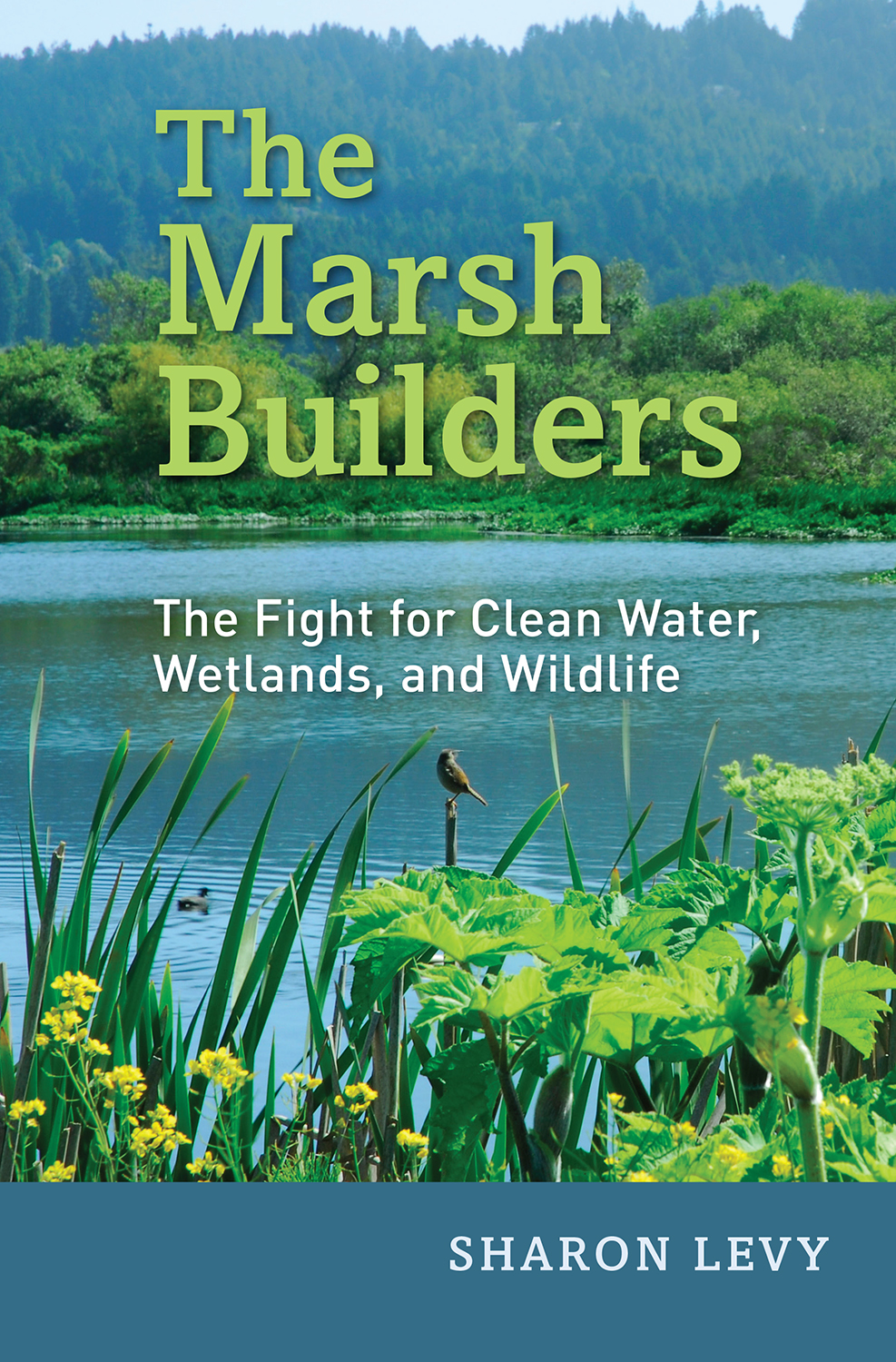
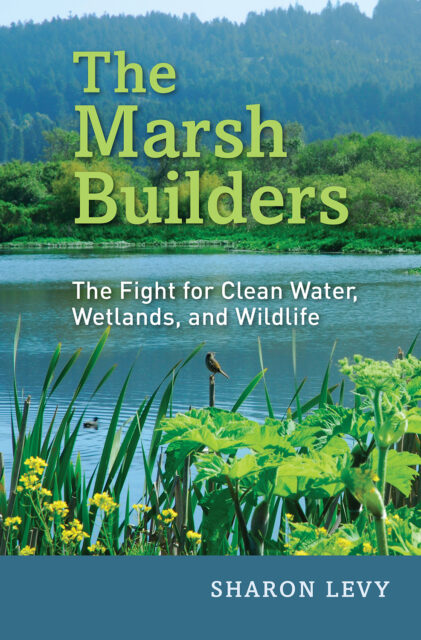
When Sharon passed away in late December 2024, she was in the process of updating her 2018 book, “The Marsh Builders: The Fight for Clean Water, Wetlands, and Wildlife.” She had obtained the publishing rights back from Oxford University Press, where her book was out of print, and was negotiating to have it reprinted by Cal Poly Humboldt However, at the time of her death, none of the revisions had been incorporated and any contract with the university was not finalized.
I contacted Sharon’s husband, Hugh Scanlon, to ask if he would allow FOAM to use the chapters pertaining to the founding of the Arcata Marsh and Wildlife Sanctuary to train its volunteer tour leaders. After some back-and-forth, Hugh offered to turn over the publishing rights to FOAM if it agreed to make the entire book available for free on its website. FOAM jumped at the chance. Hugh kindly agreed to reproduce the book in PDF form, divided by chapters. The only change he made was to the Acknowledgments page.
Hugh wanted “The Marsh Builders” to be a resource for all, not just those who could afford to buy an expensive, small-print-run book. FOAM thanks him for allowing it to be the venue for his largesse and hope that all will enjoy reading this valuable historical and scientific resource that covers the fight for clean water, wetlands, and wildlife – the 3 W’s that are at the heart of FOAM’s mission.
–Sue Leskiw, Friends of the Arcata Marsh
****************************************************************************************************************************************
About the Book
For centuries, humanity has fouled rivers, lakes and bays while destroying the wetlands that act as natural filters for polluted water. Today waters in the US and around the world are tainted with an overload of nutrients carried in runoff from farms and cities. Nutrient pollution triggers algal blooms that can poison drinking water and creates New Jersey- sized dead zones where no fish can survive. Revived wetlands hold great promise for healing the lakes and bays that sustain us, as well as shielding coastal cities from the impacts of rising seas. Manmade wetlands designed to treat polluted water are already playing an important role in the ecology of migratory birds.
“The marsh in the small northern California city of Arcata teems with life: river otters, frogs, ducks, falcons. This idyllic habitat also filters sewage. It exists because of a citizen uprising against high-tech, energy-intensive sewage treatment systems mandated in the early years of the Clean Water Act. Powered by sun and wind, Arcata’s pioneering project has inspired treatment wetlands worldwide, from Arizona to Saipan.” Arcata science writer Sharon Levy penned “The Marsh Builders: The Fight for Clean Water,Wetlands, and Wildlife.” Published by Oxford University Press in 2018, the book delves into the global roots of Arcata’s quirky story, as well as its lessons for modern activists and regulators.
“The Marsh Builders” goes beyond the creation of the Arcata Marsh to discuss reasons why wetland destruction was long seen as a triumph and obstacles to marsh restoration; the evolution of sewage treatment; the long political and scientific struggle for clean water in the United States; and impacts of water pollution on wildlife and using treatment wetlands as habitat. The book appeals to readers interested in the history of science and the environment, as well as the ongoing struggle to reclaim polluted waters. It is useful in courses on environmental planning, wetlands ecology and restoration, and ecological engineering.
The book discusses:
- The reasons why wetland destruction was long seen as a triumph and the obstacles to restoration
- The evolution of sewage treatment
- The long political and scientific struggle for clean water in the United States Impacts of water pollution on wildlife, and treatment wetlands as habitats.
The introduction and chapters 3 (partial), 6, 8, 9, and 12 deal specifically with the long struggle to create the Arcata Marsh and Wildlife Sanctuary and wetlands-based wastewater treatment plant.
****************************************************************************************************************************************
About the Author
Sharon loved the Arcata Marsh. She led tours there for many years, first Audubon field trips, then for FOAM, once telling me how she used to carry her daughter Maya along in a backpack as she led field trips (and Maya is now in her mid-20s.). A FOAM Life Member, she regularly trained FOAM tour leaders about the history of Arcata’s wastewater treatment process.
Sharon, who grew up in Chicago, earned a BS in biology from the University of Illinois at Urbana-Champaign and an MS in environmental toxicology from Oregon State. She moved to Arcata in 1994. She was a freelance science writer since 1993, “covering the quirks and wonders of the natural world and the ways humanity has changed it, for good and ill.” She wrote for magazines like National Wildlife, Audubon, Nature, and New Scientist and for websites on wildlife and environmental topics ranging from malaria-carrying mosquitos to wolves, fish, and sea otters.
In the mid-90s, she proposed a book about the Marsh’s unique wastewater treatment process, interviewing many people who were most involved with the Marsh’s creation (these interviews will be posted in the FOAM website’s history section), but found no takers. “Publishers were unwilling to commit to a book about the ecology of sewage,” she stated in an interview, so she put her marsh book proposal aside, continued freelancing, and in 2011 published a different book for Oxford: “Once and Future Giants: what Ice Age extinctions tell us about the fate of the Earth’s largest animals.” That book received an honorable mention for the Rachel Carson Book Award.
In 2014 she dug out her old notes and revisited her marsh proposal book, “in light of contemporary water pollution controversies,” landing a contract with Oxford. Sharon counseled aspiring authors to “do a book when you’re passionate about the subject and be patient. The book I just finished goes deeper into humanity’s quirky relationship with wetlands than any book I could have written back in the 90s.”
****************************************************************************************************************************************
****************************************************************************************************************************************
Download “The Marsh Builders: The Fight for Clean Water, Wetlands, and Wildlife”